
By Greg Vandecar
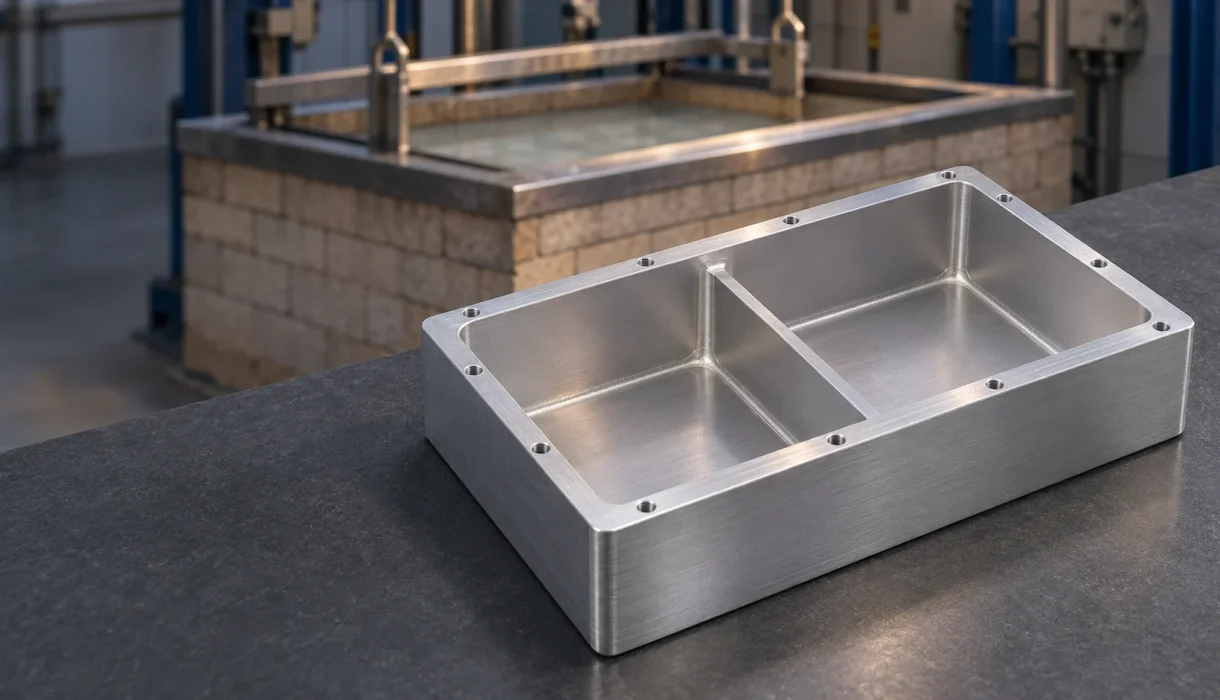
Look inside an avionics enclosure or a liquid-cooled cold plate and you may find a joint that a welder could never reach once the assembly was closed. Aluminium salt bath dip brazing gives engineers a way to make several of those joints in a single heating cycle. Here are five things to know when deciding whether it suits your design.
1. The salt bath is one way to supply the heat
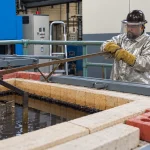
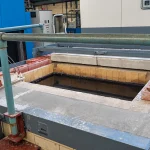
Brazing has a long history, and today manufacturers use several heat sources, including torches and furnaces. In salt bath dip brazing, the components are assembled with the filler metal already in place. The bath heats the whole assembly and acts as a flux, helping the molten filler wet the joint surfaces. This makes it possible to join several seams at once, including internal seams that would be difficult to reach individually.
2. The filler metal melts while the aluminium stays solid
Soldering and brazing both use a filler metal. The conventional dividing line is 450°C. Brazing uses a filler with a liquidus temperature above that threshold and below the temperature at which the parent metal begins to melt. The actual bath temperature depends on the aluminium alloy and filler selected for the job.
In fusion welding, the parent metal at the joint melts. That difference matters for a thin-walled enclosure. A welding torch heats the seam locally, whereas the bath heats the surrounding walls as well. Each process therefore calls for a different approach to joint design and distortion control.
3. Joint preparation matters as much as the dip
- Clean the parts. Oil and machining residue can prevent the filler from wetting the joint surfaces.
- Position the filler and support the assembly. A shim or wire can supply filler at the seam. Fixtures hold the parts in position during preheating and immersion.
- Control the bath and the joint clearance. The molten salt supplies heat and helps disrupt surface oxides. Once the filler melts, capillary action draws it between closely fitted surfaces. A gap that is too tight can restrict flow, while an overly wide gap weakens the capillary effect.
- Remove residual salt. The finished assembly needs thorough cleaning. For a cold plate, that means planning how cleaning fluid will reach and drain from internal passages before finalising the design.
4. Uniform heating can limit distortion in thin sections
Aluminium combines low weight with good thermal conductivity. In a heat exchanger, for example, thin fins provide a large surface area without adding much mass. Heating the fins and their support together can reduce the local temperature differences that cause thin sections to move. Alloy compatibility, wall thickness and fixturing still matter. Specify the dimensions that must be held after brazing so they can be checked on the finished part.
5. The application determines how the joint is tested
A cold plate and a microwave enclosure may both need continuous seams, but they serve different purposes. For a cold plate, the buyer can specify a test pressure and an acceptable leak rate. For a radar or communications enclosure, electrical continuity at the seams can support electromagnetic shielding. The full enclosure, including its lid and openings, determines the shielding performance.
At Sensory Edge, we help customers turn these requirements into a manufacturing brief for specialist production partners. If you have an enclosure, chassis or cold plate in development, share the drawing, alloy, critical tolerances and test requirements when you enquire about aluminium salt bath dip brazing.