
By Greg Vandecar
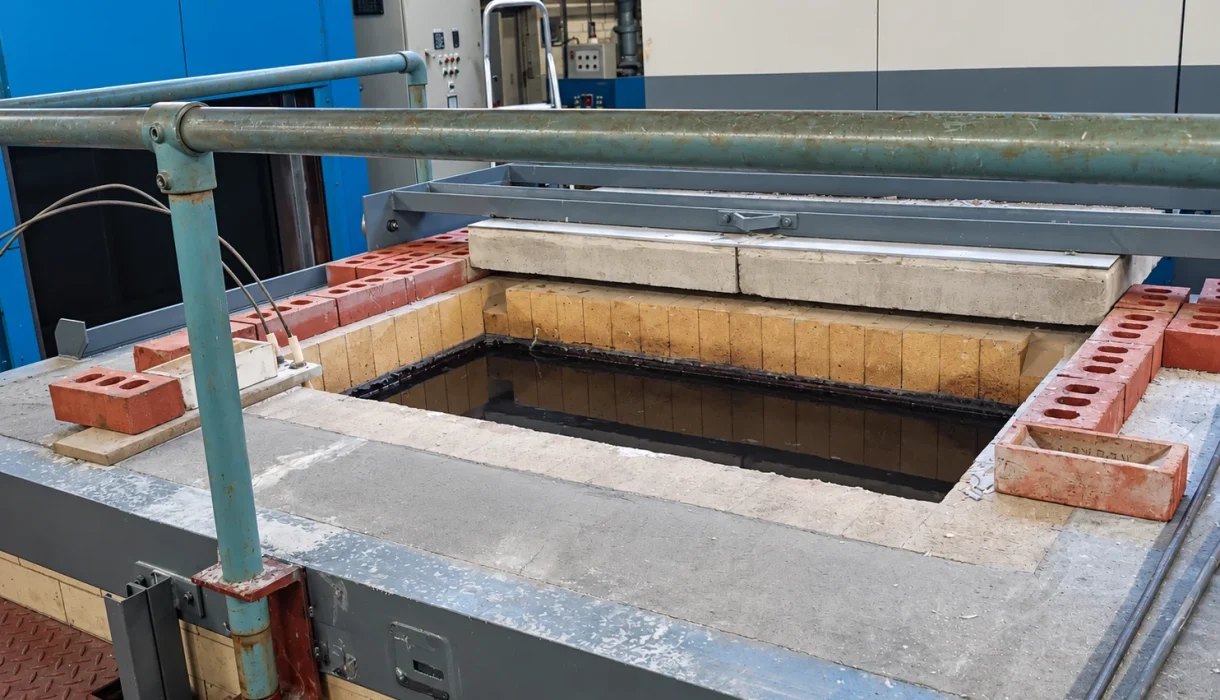
Aluminium dip brazing is a way of joining aluminium parts by immersing them in a heated salt bath. A filler alloy melts and flows between closely fitted surfaces while the aluminium parts themselves remain solid. When the filler cools, it bonds the parts together. The technique is particularly useful when several seams need to be joined at once, including seams that would be difficult to reach with a welding torch.
How does the salt bath form a joint?
Start with two clean aluminium surfaces and a small, controlled gap between them. The manufacturer places filler, often as a thin shim or wire, next to the joint and supports the parts so they stay aligned. After preheating, the assembly goes into the bath. The molten salt transfers heat to the assembly and acts as a flux, helping to break down the oxide layer that otherwise prevents filler from wetting aluminium.
Once molten, the filler travels along the gap by capillary action. Joint clearance matters here: a tight fit that leaves no path for filler can be just as troublesome as a gap that is too wide. After brazing, the assembly is cooled and cleaned to remove residual salts, including any trapped in internal passages.
Why dip braze an aluminium cold plate?
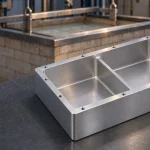
Consider a cold plate that carries heat away from electronics. A machinist cuts coolant channels into a base, but those channels need a lid. Bolts and a gasket are one option if the lid must come off for servicing. If the design calls for a permanently sealed plate, dip brazing can bond the lid to the perimeter and internal lands in a single cycle.
The drawing should identify where coolant may flow and where it must be kept out. An external leak test can show whether fluid escapes from the plate. If adjacent circuits must remain separate, the test also needs to check for leakage between them. A plate can look dry on the outside yet still allow fluid to cross an internal partition.
When is dip brazing a good fit?
Other candidates include avionics chassis, waveguides and heat exchangers. The common feature is joint geometry: several walls, fins or partitions need to meet accurately inside a lightweight assembly. Heating the whole assembly can help limit local distortion, although thin walls still need support. The supplier must also check that the parent alloy and filler are compatible and that every cavity can be cleaned after brazing.
What should you include in a quote request?
Send the assembly drawing or STEP file, alloy specification, order quantity and any critical dimensions. For a cold plate, include the working fluid, operating pressure, test pressure and acceptable leak rate. Identify faces that need to stay flat or will be machined after joining. These details help the manufacturer assess the design before tooling or inspection decisions become expensive to change.
Explore Sensory Edge’s aluminium salt bath dip brazing service or send us your drawing to discuss your assembly with our team.